Poetry logo

Poem of the day

Categories

Poetry Hubs

Simple Poetry's mission is to bring the beauty of poetry to everyone, creating a platform where poets can thrive.

Copyright Simple Poetry © 2026 • All Rights Reserved • Made with ♥ by Baptiste Faure.

Shortcuts

  • Poem of the day
  • Categories
  • Search Poetry
  • Contact

Ressources

  • Request a Poem
  • Submit a Poem
  • Help Center (FAQ)
  • Privacy Policy
  • Terms of Service
Browse poems by categories

Poems about Love

Poems about Life

Poems about Nature

Poems about Death

Poems about Friendship

Poems about Inspirational

Poems about Heartbreak

Poems about Sadness

Poems about Family

Poems about Hope

Poems about Happiness

Poems about Loss

Poems about War

Poems about Dreams

Poems about Spirituality

Poems about Courage

Poems about Freedom

Poems about Identity

Poems about Betrayal

Poems about Loneliness

Poetry around the world

Barcelona Poetry Events

Berlin Poetry Events

Buenos Aires Poetry Events

Cape Town Poetry Events

Dublin Poetry Events

Edinburgh Poetry Events

Istanbul Poetry Events

London Poetry Events

Melbourne Poetry Events

Mexico City Poetry Events

Mumbai Poetry Events

New York City Poetry Events

Paris Poetry Events

Prague Poetry Events

Rome Poetry Events

San Francisco Poetry Events

Sydney Poetry Events

Tokyo Poetry Events

Toronto Poetry Events

Vancouver Poetry Events

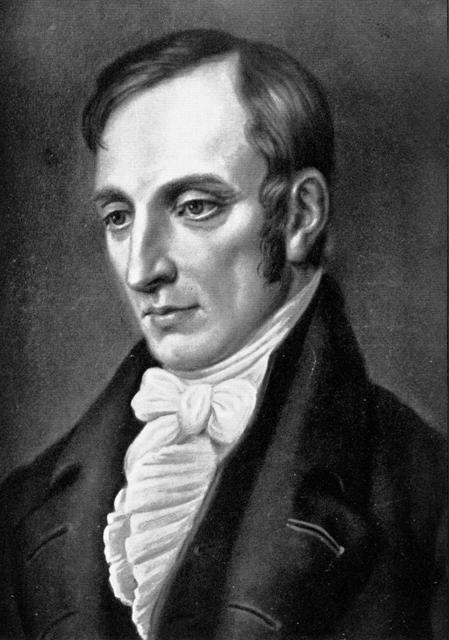
William Wordsworth

William Wordsworth was a major English Romantic poet who, with Samuel Taylor Coleridge, helped launch the Romantic Age in English literature with their joint publication 'Lyrical Ballads' in 1798. Born on April 7, 1770, Wordsworth's works are noted for their emphasis on the beauty of nature, the importance of emotion, and the value of the individual. His most famous work, 'The Prelude', is considered to be his masterpiece, which is a semi-autobiographical poem that he revised throughout his life.

April 7, 1770

April 23, 1850

English

William Wordsworth

Page 42 of 51

Previous

Next

Page 42 of 51

The River Duddon - A Series Of Sonnets, 1820. - XXVIII - Journey Renewed

I rose while yet the cattle, heat-opprest,
Crowded together under rustling trees
Brushed by the current of the water-breeze;
And for 'their' sakes, and love of all that rest,
On Duddon's margin, in the sheltering nest;
For all the startled scaly tribes that slink
Into his coverts, and each fearless link
Of dancing insects forged upon his breast;
For these, and hopes and recollections worn
Close to the vital seat of human clay;
Glad meetings, tender partings, that upstay
The drooping mind of absence, by vows sworn
In his pure presence near the trysting thorn
I thanked the Leader of my onward way.

William Wordsworth

The River Duddon - A Series Of Sonnets, 1820. - XXVI - Return, Content! For Fondly I Pursued

Return, Content! for fondly I pursued,
Even when a child, the Streams, unheard, unseen;
Through tangled woods, impending rocks between;
Or, free as air, with flying inquest viewed
The sullen reservoirs whence their bold brood
Pure as the morning, fretful, boisterous, keen,
Green as the salt-sea billows, white and green
Poured down the hills, a choral multitude!
Nor have I tracked their course for scanty gains;
They taught me random cares and truant joys,
That shield from mischief and preserve from stains
Vague minds, while men are growing out of boys;
Maturer Fancy owes to their rough noise
Impetuous thoughts that brook not servile reins.

William Wordsworth

The River Duddon - A Series Of Sonnets, 1820. - XXV - Methinks 'twere No Unprecedented Feat

Methinks 'twere no unprecedented feat
Should some benignant Minister of air
Lift, and encircle with a cloudy chair,
The One for whom my heart shall ever beat
With tenderest love; or, if a safer seat
Atween his downy wings be furnished, there
Would lodge her, and the cherished burden bear
O'er hill and valley to this dim retreat!
Rough ways my steps have trod; too rough and long
For her companionship; here dwells soft ease:
With sweets that she partakes not some distaste
Mingles, and lurking consciousness of wrong;
Languish the flowers; the waters seem to waste
Their vocal charm; their sparklings cease to please.

William Wordsworth

The River Duddon - A Series Of Sonnets, 1820. - XXXIII - Conclusion

But here no cannon thunders to the gale;
Upon the wave no haughty pendants cast
A crimson splendour: lowly is the mast
That rises here, and humbly spread, the sail;
While, less disturbed than in the narrow Vale
Through which with strange vicissitudes he passed,
The Wanderer seeks that receptacle vast
Where all his unambitious functions fail
And may thy Poet, cloud-born Stream! be free
The sweets of earth contentedly resigned,
And each tumultuous working left behind
At seemly distance, to advance like Thee;
Prepared, in peace of heart, in calm of mind
And soul, to mingle with Eternity!

William Wordsworth

The River Duddon - A Series Of Sonnets, 1820. - XXXII - Not Hurled Precipitous From Steep To Steep

Not hurled precipitous from steep to steep;
Lingering no more 'mid flower-enameled lands
And blooming thickets; nor by rocky bands
Held; but in radiant progress toward the Deep
Where mightiest rivers into powerless sleep
Sink, and forget heir nature, 'now' expands
Majestic Duddon, over smooth flat sands
Gliding in silence with unfettered sweep!
Beneath an ampler sky a region wide
Is opened round him: hamlets, towers, and towns,
And blue-topped hills, behold him from afar;
In stately mien to sovereign Thames allied
Spreading his bosom under Kentish downs,
With commerce freighted, or triumphant war.

William Wordsworth

The River Duddon - A Series Of Sonnets, 1820. - XXXI - The Kirk Of Ulpha To The Pilgrim's Eye

The Kirk of Ulpha to the pilgrim's eye
Is welcome as a star, that doth present
Its shining forehead through the peaceful rent
Of a black cloud diffused o'er half the sky:
Or as a fruitful palm-tree towering high
O'er the parched waste beside an Arab's tent;
Or the Indian tree whose branches, downward bent,
Take root again, a boundless canopy.
How sweet were leisure! could it yield no more
Than 'mid that wave-washed Churchyard to recline,
From pastoral graves extracting thoughts divine;
Or there to pace, and mark the summits hoar
Of distant moonlit mountains faintly shine,
Soothed by the unseen River's gentle roar.

William Wordsworth

The River Duddon - A Series Of Sonnets, 1820. - XXXIV - After-Thought

I thought of Thee, my partner and my guide,
As being past away. Vain sympathies!
For, backward, Duddon, as I cast my eyes,
I see what was, and is, and will abide;
Still glides the Stream, and shall for ever glide;
The Form remains, the Function never dies;
While we, the brave, the mighty, and the wise,
We Men, who in our morn of youth defied
The elements, must vanish; be it so!
Enough, if something from our hands have power
To live, and act, and serve the future hour;
And if, as toward the silent tomb we go,
Through love, through hope, and faith's transcendent dower,
We feel that we are greater than we know.

William Wordsworth

The River Duddon - A Series Of Sonnets, 1820. - XXX - Who Swerves From Innocence, Who Makes Divorce

Who swerves from innocence, who makes divorce
Of that serene companion, a good name,
Recovers not his loss; but walks with shame,
With doubt, with fear, and haply with remorse:
And oft-times he who, yielding to the force
Of chance-temptation, ere his journey end,
From chosen comrade turns, or faithful friend
In vain shall rue the broken intercourse.
Not so with such as loosely wear the chain
That binds them, pleasant River! to thy side:
Through the rough copse wheel thou with hasty stride;
I choose to saunter o'er the grassy plain,
Sure, when the separation has been tried,
That we, who part in love, shall meet again.

William Wordsworth

The River Eden, Cumberland

Eden! till now thy beauty had I viewed
By glimpses only, and confess with shame
That verse of mine, whate'er its varying mood,
Repeats but once the sound of thy sweet name:
Yet fetched from Paradise that honour came,
Rightfully borne; for Nature gives thee flowers
That have no rivals among British bowers;
And thy bold rocks are worthy of their fame.
Measuring thy course, fair Stream! at length I pay
To my life's neighbour dues of neighbourhood;
But I have traced thee on thy winding way
With pleasure sometimes by this thought restrained
For things far off we toil, while many a good
Not sought, because too near, is never gained.

William Wordsworth

The Sailor's Mother

One morning (raw it was and wet
A foggy day in winter time)
A Woman on the road I met,
Not old, though something past her prime:
Majestic in her person, tall and straight;
And like a Roman matron's was her mien and gait.

The ancient spirit is not dead;
Old times, thought I, are breathing there;
Proud was I that my country bred
Such strength, a dignity so fair:
She begged an alms, like one in poor estate;
I looked at her again, nor did my pride abate.

When from these lofty thoughts I woke,
"What is it," said I, "that you bear,
Beneath the covert of your Cloak,
Protected from this cold damp air? "
She answered, soon as she the question heard,
"A simple burthen, Sir, a little Singing-bird."

And, thus continuing, she said,
"I had a...

William Wordsworth

The Seven Sisters

Or, The Solitude Of Binnorie

Seven Daughter had Lord Archibald,
All children of one mother:
You could not say in one short day
What love they bore each other.
A garland, of seven lilies, wrought!
Seven sisters that together dwell;
But he, bold Knight as ever fought,
Their Father, took of them no thought,
He loved the wars so well.
Sing, mournfully, oh! mournfully,
The solitude of Binnorie!

Fresh blows the wind, a western wind,
And from the shores of Erin,
Across the wave, a Rover brave
To Binnorie is steering:
Right onward to the Scottish strand
The gallant ship is borne;
The warriors leap upon the land,
And hark! the Leader of the band
Hath blown his bugle horn.
Sing, mournfully, oh! mournfully,
The solitude of Binnor...

William Wordsworth

The Shepherd, Looking Eastward, Softly Said

The Shepherd, looking eastward, softly said
"Bright is thy veil, O Moon, as thou art bright!"
Forthwith, that little cloud, in ether spread
And penetrated all with tender light,
She cast away, and showed her fulgent head
Uncovered; dazzling the Beholder's sight
As if to vindicate her beauty's right
Her beauty thoughtlessly disparaged.
Meanwhile that veil, removed or thrown aside,
Went floating from her, darkening as it went;
And a huge mass, to bury or to hide,
Approached this glory of the firmament;
Who meekly yields, and is obscured content
With one calm triumph of a modest pride.

William Wordsworth

The Simplon Pass

Brook and road
Were fellow-travellers in this gloomy Pass,
And with them did we journey several hours
At a slow step. The immeasurable height
Of woods decaying, never to be decayed,
The stationary blasts of waterfalls,
And in the narrow rent, at every turn,
Winds thwarting winds bewildered and forlorn,
The torrents shooting from the clear blue sky,
The rocks that muttered close upon our ears,
Black drizzling crags that spake by the wayside
As if a voice were in them, the sick sight
And giddy prospect of the raving stream,
The unfettered clouds and region of the heavens,
Tumult and peace, the darkness and the light
Were all like workings of one mind, the features
Of the same face, blossoms upon one tree,
Characters of the great Apocalypse,
The types a...

William Wordsworth

The Solitary Reaper

Behold her, single in the field,
Yon solitary Highland Lass!
Reaping and singing by herself;
Stop here, or gently pass!
Alone she cuts and binds the grain,
And sings a melancholy strain;
O listen! for the Vale profound
Is overflowing with the sound.

No Nightingale did ever chaunt
More welcome notes to weary bands
Of travellers in some shady haunt,
Among Arabian sands:
A voice so thrilling ne'er was heard
In spring-time from the Cuckoo-bird,
Breaking the silence of the seas
Among the farthest Hebrides.

Will no one tell me what she sings?
Perhaps the plaintive numbers flow
For old, unhappy, far-off things,
And battles long ago:
Or is it some more humble lay,
Familiar matter of to-day?
Some natural sorrow, loss, or pain,<...

William Wordsworth

The Somnambulist

List, ye who pass by Lyulph's Tower
At eve; how softly then
Doth Aira-force, that torrent hoarse,
Speak from the woody glen!
Fit music for a solemn vale!
And holier seems the ground
To him who catches on the gale
The spirit of a mournful tale,
Embodied in the sound.

Not far from that fair site whereon
The Pleasure-house is reared,
As story says, in antique days
A stern-browed house appeared;
Foil to a Jewel rich in light
There set, and guarded well;
Cage for a Bird of plumage bright,
Sweet-voiced, nor wishing for a flight
Beyond her native dell.

To win this bright Bird from her cage,
To make this Gem their own,
Came Barons bold, with store of gold,
And Knights of high renown;
But one She prized, and only one;
Sir ...

William Wordsworth

The Sonnet I

Nuns fret not at their convent’s narrow room,
And hermits are contented with their cells,
And students with their pensive citadels;
Maids at the wheel, the weaver at his loom,
Sit blithe and happy; bees that soar for bloom,
High as the highest peak of Furness fells,
Will murmur by the hour in foxglove bells:
In truth the prison unto which we doom
Ourselves no prison is: and hence for me,
In sundry moods, ’twas pastime to be bound
Within the Sonnet’s scanty plot of ground;
Pleased if some souls (for such there needs must be)
Who have felt the weight of too much liberty,
Should find brief solace there, as I have found.

William Wordsworth

The Sonnet II

Scorn not the Sonnet; Critic, you have frown’d,
Mindless of its just honours; with this key
Shakespeare unlock’d his heart; the melody
Of this small lute gave ease to Petrarch’s wound;
A thousand times this pipe did Tasso sound;
With it Camöens sooth’d an exile’s grief;
The Sonnet glitter’d a gay myrtle leaf
Amid the cypress with which Dante crown’d
His visionary brow: a glow-worm lamp,
It cheer’d mild Spenser, call’d from Faery-land
To struggle through dark ways; and when a damp
Fell round the path of Milton, in his hand
The Thing became a trumpet; whence he blew
Soul-animating strains, alas, too few!

William Wordsworth

The Sparrow's Nest

Behold, within the leafy shade,
Those bright blue eggs together laid!
On me the chance-discovered sight
Gleamed like a vision of delight.
I started, seeming to espy
The home and sheltered bed,
The Sparrow's dwelling, which, hard by
My Father' house, in wet or dry
My sister Emmeline and I
Together visited.

She looked at it and seemed to fear it;
Dreading, tho' wishing, to be near it:
Such heart was in her, being then
A little Prattler among men.
The Blessing of my later year
Was with me when a boy:
She gave me eyes, she gave me ears;
And humble care, and delicate fears;
A heart, the fountain of sweet tears;
And love, and thought, and joy.

William Wordsworth

Page 42 of 51

Previous

Next

Page 42 of 51