Poetry logo

Poem of the day

Categories

Poetry Hubs

Simple Poetry's mission is to bring the beauty of poetry to everyone, creating a platform where poets can thrive.

Copyright Simple Poetry © 2026 • All Rights Reserved • Made with ♥ by Baptiste Faure.

Shortcuts

  • Poem of the day
  • Categories
  • Search Poetry
  • Contact

Ressources

  • Request a Poem
  • Submit a Poem
  • Help Center (FAQ)
  • Privacy Policy
  • Terms of Service
Browse poems by categories

Poems about Love

Poems about Life

Poems about Nature

Poems about Death

Poems about Friendship

Poems about Inspirational

Poems about Heartbreak

Poems about Sadness

Poems about Family

Poems about Hope

Poems about Happiness

Poems about Loss

Poems about War

Poems about Dreams

Poems about Spirituality

Poems about Courage

Poems about Freedom

Poems about Identity

Poems about Betrayal

Poems about Loneliness

Poetry around the world

Barcelona Poetry Events

Berlin Poetry Events

Buenos Aires Poetry Events

Cape Town Poetry Events

Dublin Poetry Events

Edinburgh Poetry Events

Istanbul Poetry Events

London Poetry Events

Melbourne Poetry Events

Mexico City Poetry Events

Mumbai Poetry Events

New York City Poetry Events

Paris Poetry Events

Prague Poetry Events

Rome Poetry Events

San Francisco Poetry Events

Sydney Poetry Events

Tokyo Poetry Events

Toronto Poetry Events

Vancouver Poetry Events

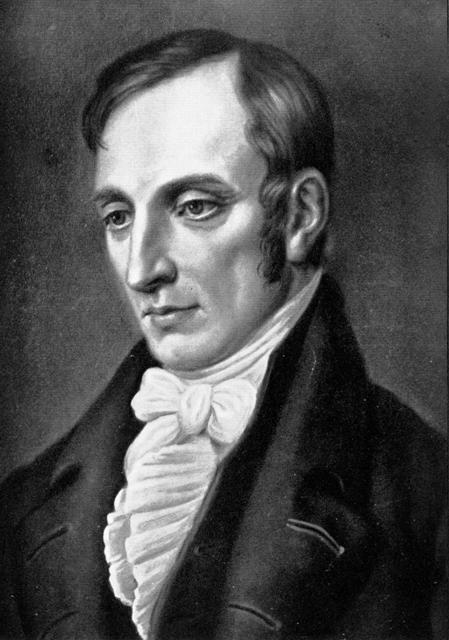
William Wordsworth

William Wordsworth was a major English Romantic poet who, with Samuel Taylor Coleridge, helped launch the Romantic Age in English literature with their joint publication 'Lyrical Ballads' in 1798. Born on April 7, 1770, Wordsworth's works are noted for their emphasis on the beauty of nature, the importance of emotion, and the value of the individual. His most famous work, 'The Prelude', is considered to be his masterpiece, which is a semi-autobiographical poem that he revised throughout his life.

April 7, 1770

April 23, 1850

English

William Wordsworth

Page 36 of 51

Previous

Next

Page 36 of 51

Stanzas Suggested In A Steamboat Off Saint Bees' Heads, On The Coast Of Cumberland

If Life were slumber on a bed of down,
Toil unimposed, vicissitude unknown,
Sad were our lot: no hunter of the hare
Exults like him whose javelin from the lair
Has roused the lion; no one plucks the rose,
Whose proffered beauty in safe shelter blows
'Mid a trim garden's summer luxuries,
With joy like his who climbs, on hands and knees,
For some rare plant, yon Headland of St. Bees.

This independence upon oar and sail,
This new indifference to breeze or gale,
This straight-lined progress, furrowing a flat lea,
And regular as if locked in certainty
Depress the hours. Up, Spirit of the storm!
That Courage may find something to perform;
That Fortitude, whose blood disdains to freeze
At Danger's bidding, may confront the seas,
Firm as the towering Headla...

William Wordsworth

Stanzas Written In My Pocket Copy Of Thomson’s "Castle Of Indolence"

Within our happy Castle there dwelt One
Whom without blame I may not overlook;
For never sun on living creature shone
Who more devout enjoyment with us took:
Here on his hours he hung as on a book,
On his own time here would he float away,
As doth a fly upon a summer brook;
But go to-morrow, or belike to-day,
Seek for him, he is fled; and whither none can say.

Thus often would he leave our peaceful home,
And find elsewhere his business or delight;
Out of our Valley's limits did he roam:
Full many a time, upon a stormy night,
His voice came to us from the neighbouring height:
Oft could we see him driving full in view
At mid-day when the sun was shining bright;
What ill was on him, what he had to do,
A mighty wonder bred among our quiet crew.

William Wordsworth

Star-Gazers

What crowd is this? what have we here! we must not pass it by;
A Telescope upon its frame, and pointed to the sky:
Long is it as a barber's pole, or mast of little boat,
Some little pleasure-skiff, that doth on Thames's waters float.

The Showman chooses well his place, 'tis Leicester's busy Square;
And is as happy in his night, for the heavens are blue and fair;
Calm, though impatient, is the crowd; each stands ready with the fee,
And envies him that's looking; what an insight must it be!

Yet, Showman, where can lie the cause? Shall thy Implement haveblame,
A boaster, that when he is tried, fails, and is put to shame?
Or is it good as others are, and be their eyes in fault?
Their eyes, or minds? or, finally, is yon resplendent vault?

Is nothing of that radiant p...

William Wordsworth

Steamboats, Viaducts, And Railways

Motions and Means, on land and sea at war
With old poetic feeling, not for this,
Shall ye, by Poets even, be judged amiss!
Nor shall your presence, howsoe'er it mar
The loveliness of Nature, prove a bar
To the Mind's gaining that prophetic sense
Of future change, that point of vision, whence
May be discovered what in soul ye are.
In spite of all that beauty may disown
In your harsh features, Nature doth embrace
Her lawful offspring in Man's art; and Time,
Pleased with your triumphs o'er his brother Space,
Accepts from your bold hands the proffered crown
Of hope, and smiles on you with cheer sublime.

William Wordsworth

Stepping Westward

"What, you are stepping westward?" "Yea."

'T would be a wildish destiny,
If we, who thus together roam
In a strange land, and far from home,
Were in this place the guests of Chance:
Yet who would stop, or fear to advance,
Though home or shelter he had none,
With such a sky to lead him on?

The dewy ground was dark and cold;
Behind, all gloomy to behold;
And stepping westward seemed to be
A kind of heavenly destiny:
I liked the greeting; 't was a sound
Of something without place or bound;
And seemed to give me spiritual right
To travel through that region bright.

The voice was soft, and she who spake
Was walking by her native lake:
The salutation had to me
The very sound of courtesy:
Its power was felt; and while my eye

William Wordsworth

Strange Fits Of Passion Have I Known

Strange fits of passion have I known:
And I will dare to tell,
But in the lover's ear alone,
What once to me befell.

When she I loved looked every day
Fresh as a rose in June,
I to her cottage bent my way,
Beneath an evening-moon.

Upon the moon I fixed my eye,
All over the wide lea;
With quickening pace my horse drew nigh
Those paths so dear to me.

And now we reached the orchard-plot;
And, as we climbed the hill,
The sinking moon to Lucy's cot
Came near, and nearer still.

In one of those sweet dreams I slept,
Kind Nature's gentlest boon!
And all the while my eye I kept
On the descending moon.

My horse moved on; hoof after hoof
He raised, and never stopped:
When down behind the cottage roof,
At on...

William Wordsworth

Stray Pleasures

By their floating mill,
That lies dead and still,
Behold yon Prisoners three,
The Miller with two Dames, on the breast of the Thames!
The platform is small, but gives room for them all;
And they're dancing merrily.

From the shore come the notes
To their mill where it floats,
To their house and their mill tethered fast:
To the small wooden isle where, their work to beguile,
They from morning to even take whatever is given;
And many a blithe day they have past.

In sight of the spires,
All alive with the fires
Of the sun going down to his rest,
In the broad open eye of the solitary sky,
They dance, there are three, as jocund as free,
While they dance on the calm river's breast.

Man and Maidens wheel,
They themselves make the reel,...

William Wordsworth

Suggested At Tyndrum In A Storm

Enough of garlands, of the Arcadian crook,
And all that Greece and Italy have sung
Of Swains reposing myrtle groves among!
'Ours' couch on naked rocks, will cross a brook
Swoln with chill rains, nor ever cast a look
This way or that, or give it even a thought
More than by smoothest pathway may be brought
Into a vacant mind. Can written book
Teach what 'they' learn? Up, hardy Mountaineer!
And guide the Bard, ambitious to be One
Of Nature's privy council, as thou art,
On cloud-sequestered heights, that see and hear
To what dread Powers He delegates his part
On earth, who works in the heaven of heavens, alone.

William Wordsworth

Suggested By A Picture Of The Bird Of Paradise

The gentlest Poet, with free thoughts endowed,
And a true master of the glowing strain,
Might scan the narrow province with disdain
That to the Painter's skill is here allowed.
This, this the Bird of Paradise! disclaim
The daring thought, forget the name;
This the Sun's Bird, whom Glendoveers might own
As no unworthy Partner in their flight
Through seas of ether, where the ruffling sway
Of nether air's rude billows is unknown;
Whom Sylphs, if e'er for casual pastime they
Through India's spicy regions wing their way,
Might bow to as their Lord. What character,
O sovereign Nature! I appeal to thee,
Of all thy feathered progeny
Is so unearthly, and what shape so fair?
So richly decked in variegated down,
Green, sable, shining yellow, shadowy brown,
Tint...

William Wordsworth

Suggested By A View From An Eminence In Inglewood Forest

The forest huge of ancient Caledon
Is but a name, no more is Inglewood,
That swept from hill to hill, from flood to flood:
On her last thorn the nightly moon has shone;
Yet still, though unappropriate Wild be none,
Fair parks spread wide where Adam Bell might deign
With Clym o' the Clough, were they alive again,
To kill for merry feast their venison.
Nor wants the holy Abbot's gliding Shade
His church with monumental wreck bestrown;
The feudal Warrior-chief, a Ghost unlaid,
Hath still his castle, though a skeleton,
That he may watch by night, and lessons con
Of power that perishes, and rights that fade.

William Wordsworth

Suggested By The Foregoing - (Monument Of Mrs. Howard)

Tranquility! the sovereign aim wert thou
In heathen schools of philosophic lore;
Heart-stricken by stern destiny of yore
The Tragic Muse thee served with thoughtful vow;
And what of hope Elysium could allow
Was fondly seized by Sculpture, to restore
Peace to the Mourner. But when He who wore
The crown of thorns around his bleeding brow
Warmed our sad being with celestial light,
'Then' Arts which still had drawn a softening grace
From shadowy fountains of the Infinite,
Communed with that Idea face to face:
And move around it now as planets run,
Each in its orbit round the central Sun.

William Wordsworth

Surprised By Joy

Surprised by joy, impatient as the Wind
I turned to share the transport, Oh! with whom
But Thee, deep buried in the silent tomb,
That spot which no vicissitude can find?
Love, faithful love, recalled thee to my mind,
But how could I forget thee? Through what power,
Even for the least division of an hour,
Have I been so beguiled as to be blind
To my most grievous loss! That thought's return
Was the worst pang that sorrow ever bore,
Save one, one only, when I stood forlorn,
Knowing my heart's best treasure was no more;
That neither present time, nor years unborn
Could to my sight that heavenly face restore.

William Wordsworth

Surprised By Joy - Impatient As The Wind

Surprised by joy, impatient as the Wind
I turned to share the transport, Oh! with whom
But Thee, deep buried in the silent tomb,
That spot which no vicissitude can find?
Love, faithful love, recalled thee to my mind
But how could I forget thee? Through what power,
Even for the least division of an hour,
Have I been so beguiled as to be blind
To my most grievous loss? That thought's return
Was the worst pang that sorrow ever bore,
Save one, one only, when I stood forlorn,
Knowing my heart's best treasure was no more;
That neither present time, nor years unborn
Could to my sight that heavenly face restore.

William Wordsworth

The Affliction Of Margaret

I

Where art thou, my beloved Son,
Where art thou, worse to me than dead?
Oh find me, prosperous or undone!
Or, if the grave be now thy bed,
Why am I ignorant of the same
That I may rest; and neither blame
Nor sorrow may attend thy name?

II

Seven years, alas! to have received
No tidings of an only child;
To have despaired, have hoped, believed,
And been for evermore beguiled;
Sometimes with thoughts of very bliss!
I catch at them, and then I miss;
Was ever darkness like to this?

III

He was among the prime in worth,
An object beauteous to behold;
Well born, well bred; I sent him forth
Ingenuous, innocent, and bold:
If things ensued that wanted grace,
As hath been said, they were not base;
And never...

William Wordsworth

The Armenian Lady's Love

I

You have heard "a Spanish Lady
How she wooed an English man;"
Hear now of a fair Armenian,
Daughter of the proud Soldan;
How she loved a Christian slave, and told her pain
By word, look, deed, with hope that he might love again.

II

"Pluck that rose, it moves my liking,"
Said she, lifting up her veil;
"Pluck it for me, gentle gardener,
Ere it wither and grow pale."
"Princess fair, I till the ground, but may not take
From twig or bed an humbler flower, even for your sake!"

III

"Grieved am I, submissive Christian!
To behold thy captive state;
Women, in your land, may pity
(May they not?) the unfortunate."
"Yes, kind Lady! otherwise man could not bear
Life, which to every one that breathes is full of care."
...

William Wordsworth

The Avon

Avon, a precious, an immortal name!
Yet is it one that other rivulets bear
Like this unheard-of, and their channels wear
Like this contented, though unknown to Fame:
For great and sacred is the modest claim
Of Streams to Nature's love, where'er they flow;
And ne'er did Genius slight them, as they go,
Tree, flower, and green herb, feeding without blame.
But Praise can waste her voice on work of tears,
Anguish, and death: full oft where innocent blood
Has mixed its current with the limpid flood,
Her heaven-offending trophies Glory rears:
Never for like distinction may the good
Shrink from 'thy' name, pure Rill, with unpleased ears.

William Wordsworth

The Birth Of Love

When Love was born of heavenly line,
What dire intrigues disturbed Cythera's joy!
Till Venus cried, "A mother's heart is mine;
None but myself shall nurse my boy,"

But, infant as he was, the child
In that divine embrace enchanted lay;
And, by the beauty of the vase beguiled,
Forgot the beverage--and pined away.

"And must my offspring languish in my sight?"
(Alive to all a mother's pain,
The Queen of Beauty thus her court addressed)
"No: Let the most discreet of all my train
Receive him to her breast:
Think all, he is the God of young delight."

Then TENDERNESS with CANDOUR joined,
And GAIETY the charming office sought;
Nor even DELICACY stayed behind:
But none of those fair Graces brought

Wherewith to nurse the child--and still...

William Wordsworth

The Black Stones Of Iona

Here on their knees men swore: the stones were black,
Black in the people's minds and words, yet they
Were at that time, as now, in colour grey.
But what is colour, if upon the rack
Of conscience souls are placed by deeds that lack
Concord with oaths? What differ night and day
Then, when before the Perjured on his way
Hell opens, and the heavens in vengeance crack
Above his head uplifted in vain prayer
To Saint, or Fiend, or to the Godhead whom
He had insulted Peasant, King, or Thane?
Fly where the culprit may, guilt meets a doom;
And, from invisible worlds at need laid bare,
Come links for social order's awful chain.

William Wordsworth

Page 36 of 51

Previous

Next

Page 36 of 51