Poetry logo

Poem of the day

Categories

Poetry Hubs

Simple Poetry's mission is to bring the beauty of poetry to everyone, creating a platform where poets can thrive.

Copyright Simple Poetry © 2026 • All Rights Reserved • Made with ♥ by Baptiste Faure.

Shortcuts

  • Poem of the day
  • Categories
  • Search Poetry
  • Contact

Ressources

  • Request a Poem
  • Submit a Poem
  • Help Center (FAQ)
  • Privacy Policy
  • Terms of Service
Browse poems by categories

Poems about Love

Poems about Life

Poems about Nature

Poems about Death

Poems about Friendship

Poems about Inspirational

Poems about Heartbreak

Poems about Sadness

Poems about Family

Poems about Hope

Poems about Happiness

Poems about Loss

Poems about War

Poems about Dreams

Poems about Spirituality

Poems about Courage

Poems about Freedom

Poems about Identity

Poems about Betrayal

Poems about Loneliness

Poetry around the world

Barcelona Poetry Events

Berlin Poetry Events

Buenos Aires Poetry Events

Cape Town Poetry Events

Dublin Poetry Events

Edinburgh Poetry Events

Istanbul Poetry Events

London Poetry Events

Melbourne Poetry Events

Mexico City Poetry Events

Mumbai Poetry Events

New York City Poetry Events

Paris Poetry Events

Prague Poetry Events

Rome Poetry Events

San Francisco Poetry Events

Sydney Poetry Events

Tokyo Poetry Events

Toronto Poetry Events

Vancouver Poetry Events

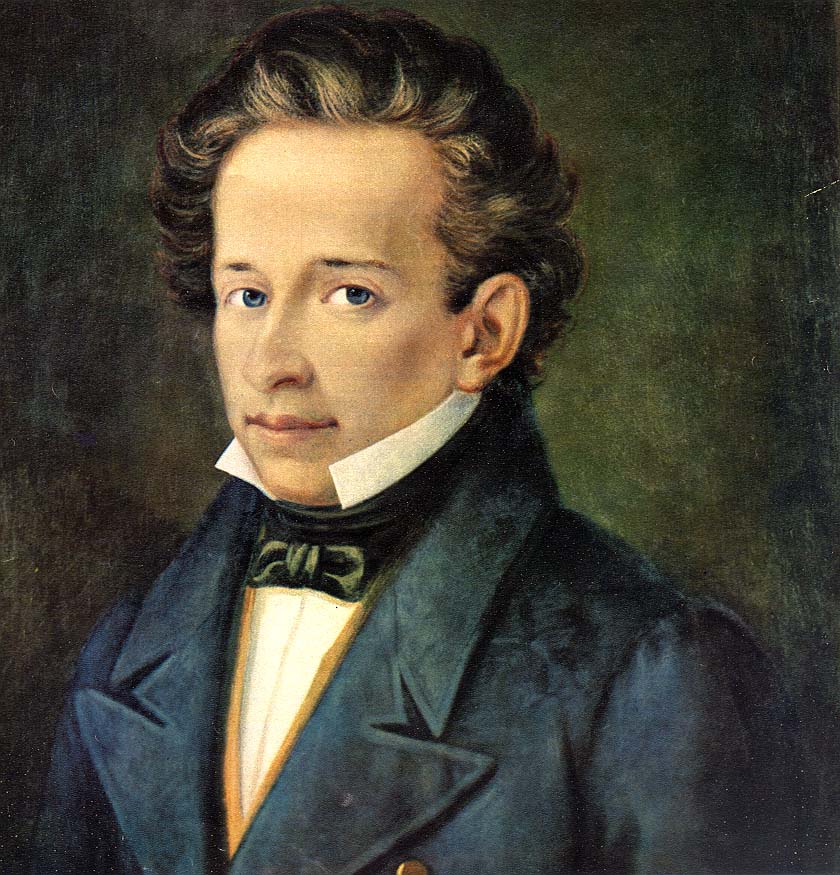
Giacomo Leopardi

Giacomo Leopardi was an Italian philosopher, poet, essayist, and philologist. Born in Recanati into a noble family, he is often considered the greatest Italian poet of the 19th century. Leopardi's works are noted for their pessimism and philosophical depth, exploring existential themes such as suffering, the nature of happiness, and the human condition. His notable works include the collection "Canti" and the philosophical dialogue "Operette morali." He died young at the age of 38 in Naples.

June 29, 1798

June 14, 1837

Italian

Giacomo Leopardi

Page 2 of 2

Previous

Next

Page 2 of 2

The Last Song Of Sappho.

    Thou tranquil night, and thou, O gentle ray
Of the declining moon; and thou, that o'er
The rock appearest, 'mid the silent grove,
The messenger of day; how dear ye were,
And how delightful to these eyes, while yet
Unknown the furies, and grim Fate! But now,
No gentle sight can soothe this wounded soul.
Then, only, can forgotten joy revive,
When through the air, and o'er the trembling fields
The raging south wind whirls its clouds of dust;
And when the car, the pondrous car of Jove,
Omnipotent, high-thundering o'er our heads,
A pathway cleaves athwart the dusky sky.
Then would I love with storm-charged clouds to fly
Along the cliffs, along the valleys deep,
The headlong flight of frightened flocks to wa...

Giacomo Leopardi

The Lonely Life.

    The morning rain, when, from her coop released,
The hen, exulting, flaps her wings, when from
The balcony the husbandman looks forth,
And when the rising sun his trembling rays
Darts through the falling drops, against my roof
And windows gently beating, wakens me.
I rise, and grateful, bless the flying clouds,
The cheerful twitter of the early birds,
The smiling fields, and the refreshing air.
For I of you, unhappy city walls,
Enough have seen and known; where hatred still
Companion is to grief; and grieving still
I live, and so shall die, and that, how soon!
But here some pity Nature shows, though small,
Once in this spot to me so courteous!
Thou, too, O Nature, turn'st away thy gaze
From mis...

Giacomo Leopardi

The Lonely Sparrow.

    Thou from the top of yonder antique tower,
O lonely sparrow, wandering, hast gone,
Thy song repeating till the day is done,
And through this valley strays the harmony.
How Spring rejoices in the fields around,
And fills the air with light,
So that the heart is melted at the sight!
Hark to the bleating flocks, the lowing herds!
In sweet content, the other birds
Through the free sky in emulous circles wheel,
In pure enjoyment of their happy time:
Thou, pensive, gazest on the scene apart,
Nor wilt thou join them in the merry round;
Shy playmate, thou for mirth hast little heart;
And with thy plaintive music, dost consume
Both of the year, and of thy life, the bloom.

Alas, how much my ways

Giacomo Leopardi

The Resurrection.

    I thought I had forever lost,
Alas, though still so young,
The tender joys and sorrows all,
That unto youth belong;

The sufferings sweet, the impulses
Our inmost hearts that warm;
Whatever gives this life of ours
Its value and its charm.

What sore laments, what bitter tears
O'er my sad state I shed,
When first I felt from my cold heart
Its gentle pains had fled!

Its throbs I felt no more; my love
Within me seemed to die;
Nor from my frozen, senseless breast
Escaped a single sigh!

I wept o'er my sad, hapless lot;
The life of life seemed lost;
The earth an arid wilderness,
Locked in eternal frost;

Giacomo Leopardi

The Ruling Thought.

    Most sweet, most powerful,
Controller of my inmost soul;
The terrible, yet precious gift
Of heaven, companion kind
Of all my days of misery,
O thought, that ever dost recur to me;

Of thy mysterious power
Who speaketh not? Who hath not felt
Its subtle influence?
Yet, when one is by feeling deep impelled
Its secret joys and sorrows to unfold,
The theme seems ever new however old.

How isolated is my mind,
Since thou in it hast come to dwell!
As by some magic spell,
My other thoughts have all,
Like lightning, disappeared;
And thou, alone, like some huge tower,
In a deserted plain,
Gigantic, solitary, dost remain.

How worthless quite,
S...

Giacomo Leopardi

The Setting Of The Moon.

    As, in the lonely night,
Above the silvered fields and streams
Where zephyr gently blows,
And myriad objects vague,
Illusions, that deceive,
Their distant shadows weave
Amid the silent rills,
The trees, the hedges, villages, and hills;
Arrived at heaven's boundary,
Behind the Apennine or Alp,
Or into the deep bosom of the sea,
The moon descends, the world grows dim;
The shadows disappear, darkness profound
Falls on each hill and vale around,
And night is desolate,
And singing, with his plaintive lay,
The parting gleam of friendly light
The traveller greets, whose radiance bright,
Till now, hath guided him upon his way;

So vanishes, so desolate
Youth le...

Giacomo Leopardi

The Village Saturday Night.

    The damsel from the field returns,
The sun is sinking in the west;
Her bundle on her head she sets,
And in her hand she bears
A bunch of roses and of violets.
To-morrow is a holiday,
And she, as usual, must them wear
Upon her bodice, in her hair.
The old crone sits among her mates,
Upon the stairs, and spins;
And, looking at the fading light,
Of good old-fashioned times she prates,
When she, too, dressed for holidays,
And with light heart, and limb as light,
Would dance at night
With the companions of her merry days.
The twilight shades around us close,
The sky to deepest blue is turned;
From hills and roofs the shadows fall,
And the new moon her face of silver shows...

Giacomo Leopardi

The Younger Brutus.

    When in the Thracian dust uprooted lay,
In ruin vast, the strength of Italy,
And Fate had doomed Hesperia's valleys green,
And Tiber's shores,
The trampling of barbarian steeds to feel,
And from the leafless groves,
On which the Northern Bear looks down,
Had called the Gothic hordes,
That Rome's proud walls might fall before their swords;
Exhausted, wet with brothers' blood,
Alone sat Brutus, in the dismal night;
Resolved on death, the gods implacable
Of heaven and hell he chides,
And smites the listless, drowsy air
With his fierce cries of anger and despair.

"O foolish virtue, empty mists,
The realms of shadows, are thy schools,
And at thy heels repentance follows fast.
...

Giacomo Leopardi

To Angelo Mai, On His Discovery Of The Lost Books Of Cicero, "De Republica."

    Italian bold, why wilt thou never cease
The fathers from their tombs to summon forth?
Why bring them, with this dead age to converse,
That stifled is by enemies and by sloth?
And why dost thou, voice of our ancestors,
That hast so long been mute,
Resound so loud and frequent in our ears?
Why all these grand discoveries?
As in a flash the fruitful pages come,
What hath this wretched age deserved,
That dusty cloisters have for it reserved
These hidden treasures of the wise and brave?
Illustrious man, with what strange power
Does Fate thy ardent zeal befriend?
Or does Fate vainly with man's will contend?

Without the lofty counsel of the gods,
It surely could not be, that now,
When ...

Giacomo Leopardi

To A Victor In The Game Of Pallone.

    The face of glory and her pleasant voice,
O fortunate youth, now recognize,
And how much nobler than effeminate sloth
Are manhood's tested energies.
Take heed, O generous champion, take heed,
If thou thy name by worthy thought or deed,
From Time's all-sweeping current couldst redeem;
Take heed, and lift thy heart to high desires!
The amphitheatre's applause, the public voice,
Now summon thee to deeds illustrious;
Exulting in thy lusty youth.
In thee, to-day, thy country dear
Beholds her heroes old again appear.

His hand was ne'er with blood barbaric stained,
At Marathon,
Who on the plain of Elis could behold
The naked athletes, and the wrestlers bold,
And feel no glow of ...

Giacomo Leopardi

To Count Carlo Pepoli.

    This wearisome and this distressing sleep
That we call life, O how dost thou support,
My Pepoli? With what hopes feedest thou
Thy heart? Say in what thoughts, and in what deeds,
Agreeable or sad, dost thou invest
The idleness thy ancestors bequeathed
To thee, a dull and heavy heritage?
All life, indeed, in every walk of life,
Is idleness, if we may give that name
To every work achieved, or effort made,
That has no worthy aim in view, or fails
That aim to reach. And if you idle call
The busy crew, that daily we behold,
From tranquil morn unto the dewy eve,
Behind the plough, or tending plants and flocks,
Because they live simply to keep alive,
And life is worthless for itself alone,
Th...

Giacomo Leopardi

To Himself.

    Nor wilt thou rest forever, weary heart.
The last illusion is destroyed,
That I eternal thought. Destroyed!
I feel all hope and all desire depart,
For life and its deceitful joys.
Forever rest! Enough! Thy throbbings cease!
Naught can requite thy miseries;
Nor is earth worthy of thy sighs.
Life is a bitter, weary load,
The world a slough. And now, repose!
Despair no more, but find in Death
The only boon Fate on our race bestows!
Still, Nature, art thou doomed to fall,
The victim scorned of that blind, brutal power
That rules and ruins all.

Giacomo Leopardi

To His Sister Paolina, On Her Approaching Marriage.

    Since now thou art about to leave
Thy father's quiet house,
And all the phantoms and illusions dear,
That heaven-born fancies round it weave,
And to this lonely region lend their charm,
Unto the dust and noise of life condemned,
By destiny, soon wilt thou learn to see
Our wretchedness and infamy,
My sister dear, who, in these mournful times,
Alas, wilt more unhappy souls bestow
On our unhappy Italy!
With strong examples strengthen thou their minds;
For cruel fate propitious gales
Hath e'er to virtue's course denied,
Nor in weak souls can purity reside.

Thy sons must either poor, or cowards be.
Prefer them poor. It is the custom still.
Desert and fortune never yet were friends;

Giacomo Leopardi

To Italy.

    My country, I the walls, the arches see,
The columns, statues, and the towers
Deserted, of our ancestors;
But, ah, the glory I do not behold,
The laurel and the sword, that graced
Our sires of old.
Now, all unarmed, a naked brow,
A naked breast dost thou display.
Ah, me, how many wounds, what stains of blood!
Oh, what a sight art thou,
Most beautiful of women! I
To heaven cry aloud, and to the world:
"Who hath reduced her to this pass?
Say, say!" And worst of all, alas,
See, both her arms in chains are bound!
With hair dishevelled, and without a veil
She sits, disconsolate, upon the ground,
And hides her face between her knees,
As she bewails her miseries.
Oh, weep, ...

Giacomo Leopardi

To Sylvia.

    O Sylvia, dost thou remember still
That period of thy mortal life,
When beauty so bewildering
Shone in thy laughing, glancing eyes,
As thou, so merry, yet so wise,
Youth's threshold then wast entering?

How did the quiet rooms,
And all the paths around,
With thy perpetual song resound,
As thou didst sit, on woman's work intent,
Abundantly content
With the vague future, floating on thy mind!
Thy custom thus to spend the day
In that sweet time of youth and May!

How could I, then, at times,
In those fair days of youth,
The only happy days I ever knew,
My hard tasks dropping, or my careless rhymes,
My station take, on father's balcony,
And listen to thy voice'...

Giacomo Leopardi

To The Beloved.

    Beauty beloved, who hast my heart inspired,
Seen from afar, or with thy face concealed,
Save, when in visions of the night revealed,
Or seen in daydreams bright,
When all the fields are filled with light,
And Nature's smile is sweet,
Say, hast thou blessed
Some golden age of innocence,
And floatest, now, a shadow, o'er the earth?
Or hath Fate's envious doom
Reserved thee for some happier day to come?

To see thee e'er alive,
No hope remains to me;
Unless perchance, when from this body free,
My wandering spirit, lone,
O'er some new path, to some new world hath flown.
E'en here, at first, I, at the dawn
Of this, my day, so dreary and forlorn,
Sought thee, to guide me on my...

Giacomo Leopardi

To The Moon.

    O lovely moon, how well do I recall
The time, - 'tis just a year - when up this hill
I came, in my distress, to gaze at thee:
And thou suspended wast o'er yonder grove,
As now thou art, which thou with light dost fill.
But stained with mist, and tremulous, appeared
Thy countenance to me, because my eyes
Were filled with tears, that could not be suppressed;
For, oh, my life was wretched, wearisome,
And is so still, unchanged, belovèd moon!
And yet this recollection pleases me,
This computation of my sorrow's age.
How pleasant is it, in the days of youth,
When hope a long career before it hath,
And memories are few, upon the past
To dwell, though sad, and though the sadness last!

Giacomo Leopardi

To The Spring. Or Of The Fables Of The Ancients.

    Now that the sun the faded charms
Of heaven again restores,
And gentle zephyr the sick air revives,
And the dark shadows of the clouds
Are put to flight,
And birds their naked breasts confide
Unto the wind, and the soft light,
With new desire of love, and with new hope,
The conscious beasts, in the deep woods,
Amid the melting frosts, inspires;
May not to you, poor human souls,
Weary, and overborne with grief,
The happy age return, which misery,
And truth's dark torch, before its time, consumed?
Have not the golden rays
Of Phoebus vanished from your gaze
Forever? Say, O gentle Spring,
Canst thou this icy heart inspire, and melt,
That in the bloom of youth, the frost of age ha...

Giacomo Leopardi

Page 2 of 2

Previous

Next

Page 2 of 2